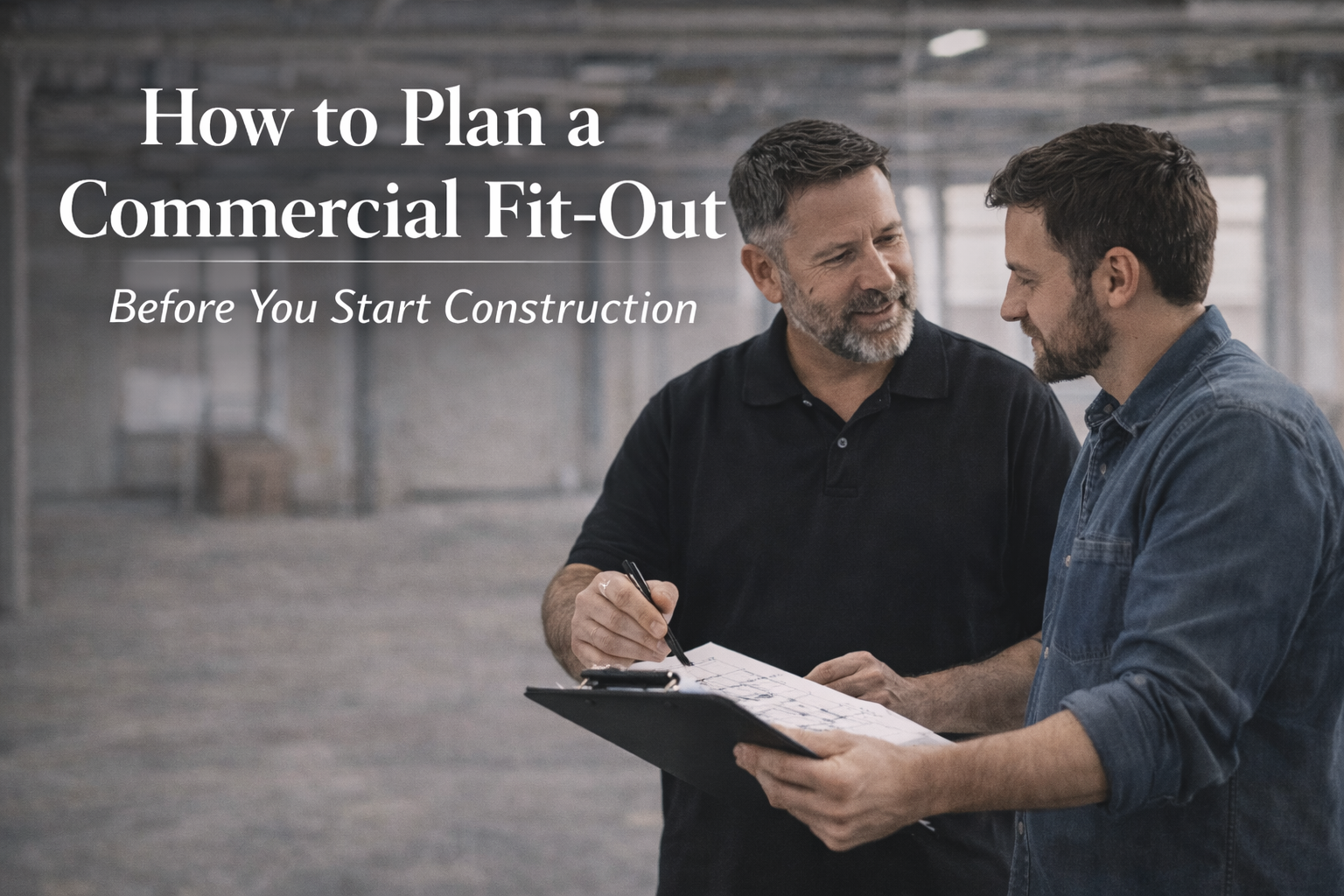
How to Plan a Commercial Fit-Out the Right Way
A commercial fit-out involves more than just layouts and finishes. Here’s what to think through before construction begins to avoid delays, rework, and unnecessary costs.
Planning a commercial space—whether it’s an office, retail store, or medical suite—comes with a unique set of challenges.
Many projects begin with a lease and a tight timeline, which can lead to rushed decisions and reactive design.
But the most successful commercial spaces are not rushed—they are planned.
Start with How the Space Will Be Used
Before layouts or finishes are considered, it’s important to understand how the space will function:
How do people move through the space?
What are the daily workflows?
Where are the key interaction points?
Design decisions should support these patterns—not work against them.
Understand Constraints Early
Every commercial project comes with constraints, including:
Building codes and occupancy requirements
Existing infrastructure (HVAC, plumbing, electrical)
Landlord requirements
Budget limitations
Identifying these early prevents costly changes later.
Why Layout Matters More Than You Think
A well-designed layout improves:
efficiency
employee experience
customer interaction
long-term flexibility
A rushed layout, on the other hand, often leads to frustration and inefficiency once the space is in use.
The Risk of Moving Too Quickly
Many commercial projects are driven by deadlines—but speed without planning can lead to:
rework during construction
unexpected costs
spaces that don’t function as intended
Taking time upfront creates a smoother process overall.
A Better Way to Approach It
The most effective commercial projects follow a clear process:
Define goals and operational needs
Evaluate the space and constraints
Develop layout options
Refine and document the design
This approach leads to a space that supports both immediate needs and long-term success.
A commercial space is more than just a place to operate—it’s an environment that affects how people work, interact, and experience your business.
Starting with a thoughtful design approach makes all the difference.
If you're planning a commercial space, early guidance can help avoid common pitfalls and set your project up for success.
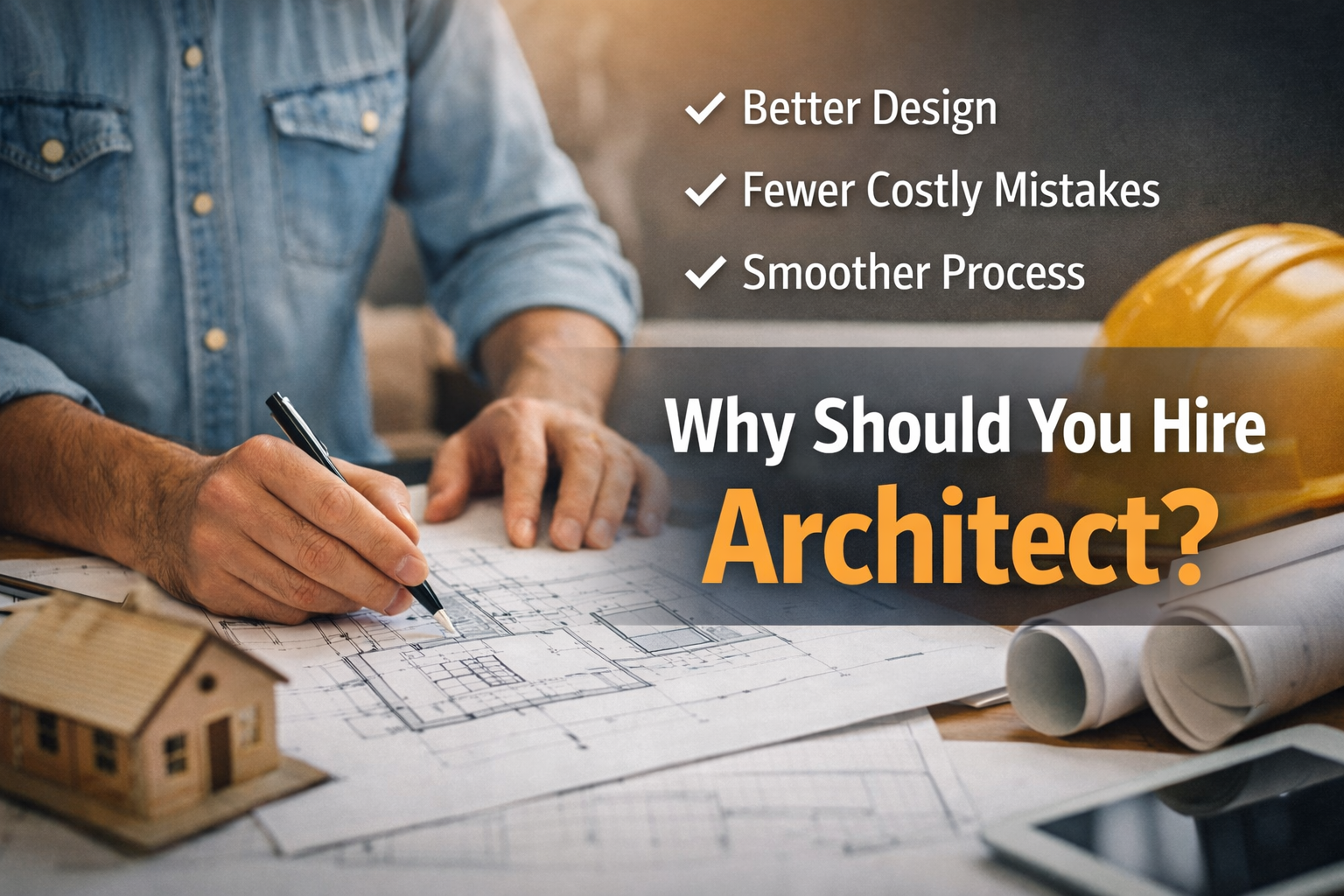
Why Should I Hire an Architect?
Learn why hiring an architect early leads to better design, fewer issues, and a smoother construction process for residential and commercial projects.
If you’re considering a renovation, custom home, or commercial space, you may be asking:
Do I really need an architect?
It’s a fair question—and one that often comes up early in the process.
While some projects can move forward without one, hiring an architect can significantly impact not just how a space looks, but how it functions, how smoothly the project runs, and ultimately how successful the final result is.
It Starts with Understanding—Not Drawings
A common misconception is that architects are brought in to produce drawings.
In reality, drawings are the result of a much larger process.
The real value of working with an architect begins earlier—by understanding how you live or work within a space, what your priorities are, and what challenges need to be solved.
This foundation shapes every decision that follows.
Designing for How You Actually Use the Space
Whether it’s a home or a commercial environment, the layout and flow of a space have a direct impact on everyday experience.
An architect helps translate your needs into a design that works—not just visually, but functionally.
This might include:
improving how rooms connect and flow
maximizing natural light
creating more efficient layouts
planning for long-term flexibility
These are decisions that are difficult to adjust once construction begins.
Avoiding Costly Mistakes
One of the biggest benefits of hiring an architect is identifying potential issues early.
Zoning restrictions, structural limitations, and coordination between systems can all impact a project in ways that aren’t always obvious at the start.
Addressing these factors during the design phase helps prevent:
unexpected changes during construction
delays
added costs
A thoughtful plan upfront often leads to a smoother, more predictable process.
Guiding the Entire Process
An architect’s role doesn’t end with design.
From early concepts through construction, we help:
develop and refine the design
prepare clear documentation
coordinate with consultants and contractors
answer questions during construction
This continuity helps maintain the integrity of the design and keeps the project aligned from start to finish.
Residential vs. Commercial Projects
For Homeowners
Hiring an architect early ensures your home reflects how you actually live—not just what fits within an existing structure.
For Commercial Projects
In commercial spaces, early planning is even more critical. Layout, workflow, and building constraints all play a role in how effectively the space functions day-to-day.
When Is the Right Time to Hire an Architect?
The short answer: as early as possible.
The earlier an architect is involved:
the more flexibility you have
the more intentional your decisions can be
the fewer surprises you’ll encounter later
Hiring an architect is not just about creating drawings—it’s about shaping a process that leads to a better outcome.
When approached thoughtfully, it can save time, reduce stress, and result in a space that truly supports how it’s meant to be used.