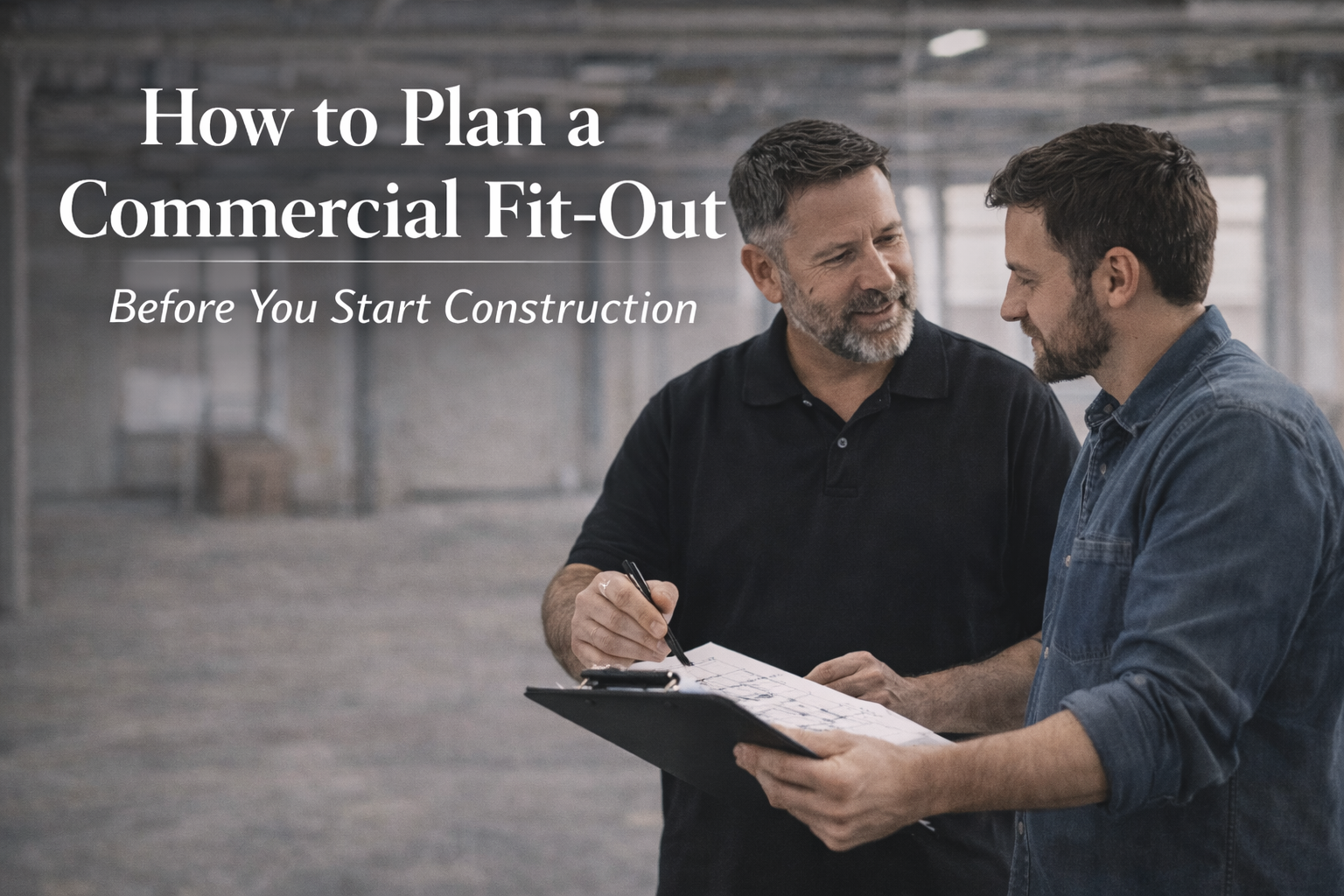
How to Plan a Commercial Fit-Out the Right Way
A commercial fit-out involves more than just layouts and finishes. Here’s what to think through before construction begins to avoid delays, rework, and unnecessary costs.
Planning a commercial space—whether it’s an office, retail store, or medical suite—comes with a unique set of challenges.
Many projects begin with a lease and a tight timeline, which can lead to rushed decisions and reactive design.
But the most successful commercial spaces are not rushed—they are planned.
Start with How the Space Will Be Used
Before layouts or finishes are considered, it’s important to understand how the space will function:
How do people move through the space?
What are the daily workflows?
Where are the key interaction points?
Design decisions should support these patterns—not work against them.
Understand Constraints Early
Every commercial project comes with constraints, including:
Building codes and occupancy requirements
Existing infrastructure (HVAC, plumbing, electrical)
Landlord requirements
Budget limitations
Identifying these early prevents costly changes later.
Why Layout Matters More Than You Think
A well-designed layout improves:
efficiency
employee experience
customer interaction
long-term flexibility
A rushed layout, on the other hand, often leads to frustration and inefficiency once the space is in use.
The Risk of Moving Too Quickly
Many commercial projects are driven by deadlines—but speed without planning can lead to:
rework during construction
unexpected costs
spaces that don’t function as intended
Taking time upfront creates a smoother process overall.
A Better Way to Approach It
The most effective commercial projects follow a clear process:
Define goals and operational needs
Evaluate the space and constraints
Develop layout options
Refine and document the design
This approach leads to a space that supports both immediate needs and long-term success.
A commercial space is more than just a place to operate—it’s an environment that affects how people work, interact, and experience your business.
Starting with a thoughtful design approach makes all the difference.